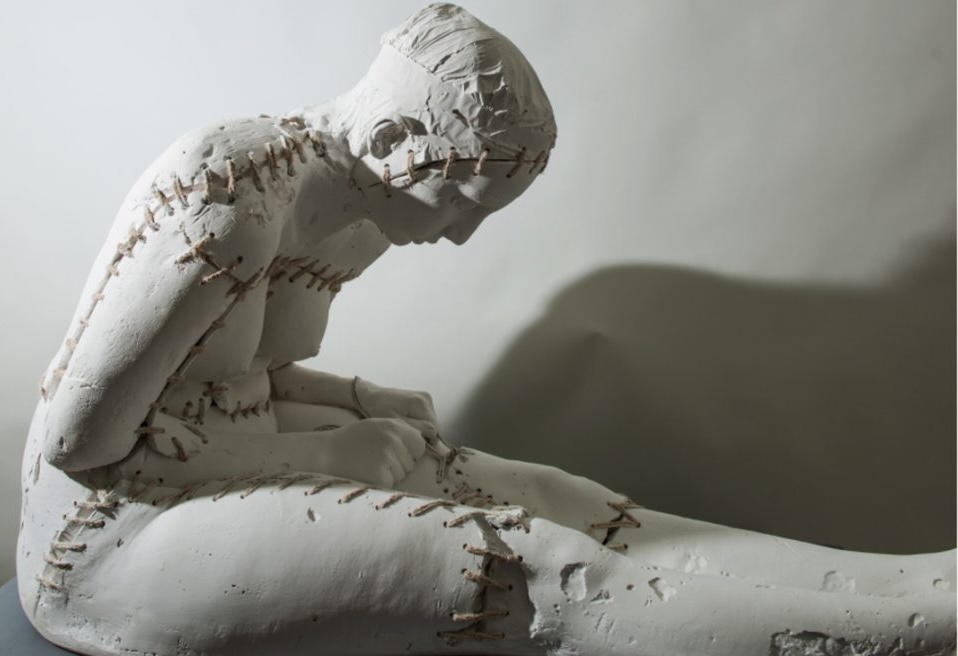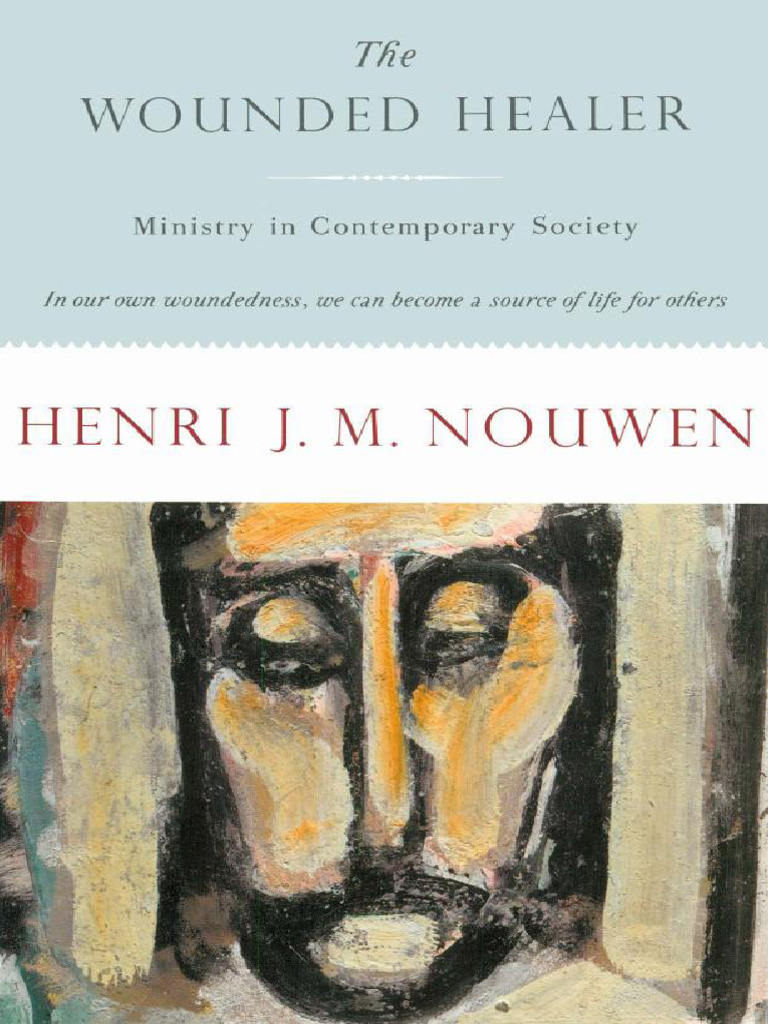
There is an ancient and persistent idea that runs through mythology, religion, and depth psychology: the person who heals others draws their healing power not from strength or invulnerability, but from their own suffering. The wound is not an obstacle to healing. It is the very source of it.
Jung called this figure the wounded healer. It is one of the most important archetype* in his psychology, and it may be the one that was most deeply personal to him. The wounded healer is not simply a concept to be understood intellectually. It is a lived reality for anyone who attempts to help others through their own darkness, and it carries both profound power and serious danger.
The core paradox is this: you cannot guide someone through territory you have never entered yourself. The healer who has never been wounded is not a healer at all. They are a technician, applying methods from the outside. But the healer who has descended into their own suffering and returned carries something different. They carry knowledge that cannot be learned from books, a presence that communicates safety to others who are suffering, and a capacity for genuine empathy that is born only from direct experience.
Who are the wounded healers?
Many of us in the helping professions are wounded healers, as are many saints. Others, such as Mother Teresa, acknowledged their struggles with the darkness of doubt. St. Thomas More struggled with fear and depression. Psychiatrist Viktor Frankl, a survivor of a Nazi concentration camp, had his struggles and consequently helped others through his creation of logotherapy—a therapeutic approach to helping people find their life purpose. He wrote about this in-depth in his book, Man’s Search for Meaning.
Characteristics of a wounded healer
- Wounded healers are people whose painful experiences enable them to help others.
- Wounded healers are good listeners, empathetic, accepting, and resourceful. They view all experiences as opportunities.
- Wounded healers may be inside or outside of the helping professions.
Big Book References to the Wounded Healer
- We have recovered, and have been given the power to help others. (AA p.132)
- No matter how far down the scale we have gone, we will see how our experience can benefit others. (AA p. 84)
- This seemed to prove that one alcoholic (addict) could affect another as no nonalcoholic (non-addict) could. It also indicated that strenuous work, one alcoholic (addict) with another, was vital to permanent recovery. (p. xvi – xvii, 4th ed.)
- Practical experience shows that nothing will so much insure immunity from drinking (using, acting out) as intensive work with other alcoholics (addicts). It works when other activities fail. This is our twelfth suggestion: Carry this message to other alcoholics (addicts)! You can help when no one else can. You can secure their confidence when others fail. Remember they are very ill. (AA p. 89)
- These men had found something brand new in life. Though they knew they must help other alcoholics if they would remain sober, that motive became secondary. It was transcended by the happiness they found in giving themselves for others. (AA p. 159)
- Showing others who suffer how we were given help is the very thing which makes life seem so worth while to us now. Cling to the thought that, in God’s hands, the dark past is the greatest possession you have — the key to life and happiness for others. With it you can avert death and misery for them.(AA p. 124)
- …our joy in escape from disaster does not subside as we go our individual ways. The feeling of having shared in a common peril is one element in the powerful cement which binds us. But that in itself would never have held us together as we are now joined. The tremendous fact for every one of us is that we have discovered a common solution. We have a way out on which we can absolutely agree, and upon which we can join in brotherly and harmonious action. (AA p. 17)
*ARCHETYPE: An original model or type after which other similar things are patterned; a prototype. In Jungian psychology, an inherited pattern of thought or symbolic imagery derived from past collective experience and present in the individual unconscious.